
What's The Difference Between Knitting & Crochet

Hello Everyone!

Knitting is crochet. Crochet is knitting…No they’re not. While they’re both forms of yarn crafts, they are both very different from each other. If you’re on my channel, or my website, you’re probably a crafts person, or someone who knows crochet and knitting, so you should already know the difference. For those who are here, just for this article, hi! Welcome! And yes, I mean it, knitting and crochet are two very different yarn crafts, and although, crocheters use knitting as a term for crochet (i.e. it’s a one-hook version of knitting), it is not knitting. The reason why I say this is because in crochet, you have many more complicated stitches than knitting. In knitting, you only have 2 types of stitches which create certain patterns, but I’ll get into that, later in this post. So, before I start rambling, here are 5 reasons why crochet and knitting are different.
1. 2 Needles Vs 1 Hook
In knitting, you have two long pointed sticks called needles. These help maintain the stitches you need for the project you’re working on. So, say for example, you’re working on a scarf, and the scarf requires about 50 stitches in a row, you’ll need to keep 50 loops on your needle, so that you can knit them together. Crochet is very different. In crochet, if you need 50 stitches in a row, you will need to create a foundation chain of 50 chains, with just one hook and your yarn, into which you can then crochet your next stitch, which is usually a single crochet or a double crochet, or if you’re feeling very adventurous, you’d crochet a pattern stitch, like shells or V-stitches (like I said, don’t worry, we’ll get into that later).

Aside from the obvious look and feel of a knitted product and a crochet one, the techniques of both crafts are different, and it is these techniques that differentiate whether the craft is harder or easier. When I used to run crochet classes, as a side project to a previous job role of mine, I had a lot of comments from people who wanted to try crochet, because they got into knitting, and they wanted to learn more about crochet, to see if it was as fun as knitting. Well, needless to say, they did find it fun, but they found it more difficult, because the techniques for knitting are not similar to crochet, and they realised why they were two completely different crafts, despite using the same, if not similar, materials and resources.
2. One Is Quicker Than The Other
Can you guess which one is quicker than the other, from the description I gave you in my previous point? If you said knitting, you’d be correct. The reason why knitting is quicker is because when you’re knitting, you’re creating the first half of a stitch, in the row below it. What I mean is, when you knit or purl a stitch onto your needle, you’re holding the first half of the next purl or stitch, for the next row, on your needle, once you complete it. It’s why there are so many loops on your needle. In crochet, you will need to make each stitch one at a time, and it’s why you only ever have one loop at the end of each stitch. Yes, you might accumulate a few loops, while you’re making a stitch, but ultimately, once you pull through those loops, that’s just one stitch, and you’ll need to do it again, until you reach the end of the row.

This is why knitting is so much faster than crochet. You’re already holding the first half of your next row, whereas in crochet, you’re creating your piece one stitch at a time, and sometimes, those stitches can be complicated, especially if you’re creating lace patterns. If you’ve ever crocheted a lace piece before, you’ll know just how time consuming that is, especially if you’re working with lace yarn or thread. It’s not a quick process. So, if you’re looking to create a detailed project, ask yourself, do you have the time? Will the project fit within the timeline you’re looking to create it? If the answer is maybe or no, then you might want to extend the timeline for the project or look at making something simpler.
3. Machine Vs Hand
This topic gets to me, every single time I see videos online, where big brands market crochet goods at ridiculously low prices. Either the piece was made by a machine that cheats the crochet stitch, or the person who made the piece is being sorely underpaid. I would urge you not to buy a crochet piece for whatever retail price they market. A good crochet top is worth at least £60 or more, depending on the details of the top, and what materials are used. A genuinely hand-crafted crochet piece would have taken a lot of time to make, and the money that the piece sells for accounts for not only the time, but also the labour and the materials. Do not discount or undermine the effort that went into making that piece. You’ll be doing the crocheter a disservice, by demanding high street costs for the luxury of their time and effort.

Ok, so I might sound like I’m ranting, but I am doing so, with reason. Crochet, unlike knitting cannot be replicated by machines. There are many stitches and techniques in crochet that cannot be programmed into a machine. For example, you can have textured pieces in crochet, where stitches can jump across rows, even overlap them at times. In knitting, you either can create gaps, or cross over a few stitches in a row, in front, or behind each other. There is no true overlap in knitting. It is why knitwear can be made with machines, whereas crochet cannot. Because of its various techniques, crochet is harder to replicate and can only be done by hand. If you see a crochet top in a store that looks like it’s been mass produced, it is not crochet, or if it is, it is being created by severely underpaid staff. So be mindful, when you buy crochet products from high street brands that sell them cheaply.
4. Knitting Uses 2 Types Of Stitches, Crochet Has A Dictionary Of Them
Finally, we’re onto the stitch types. In knitting, you have 2 types of stitches that can be handled in all sorts of ways. You have the knit stitch or the purl stitch, and these, when paired with different patterns or yarn overs, can create different looks and textures. It is because of these two stitches that you get so many different knitwear and blankets. The more complicated part of knitting is its colour work, since you can knit whole scenes, patterns and images together, in one go.
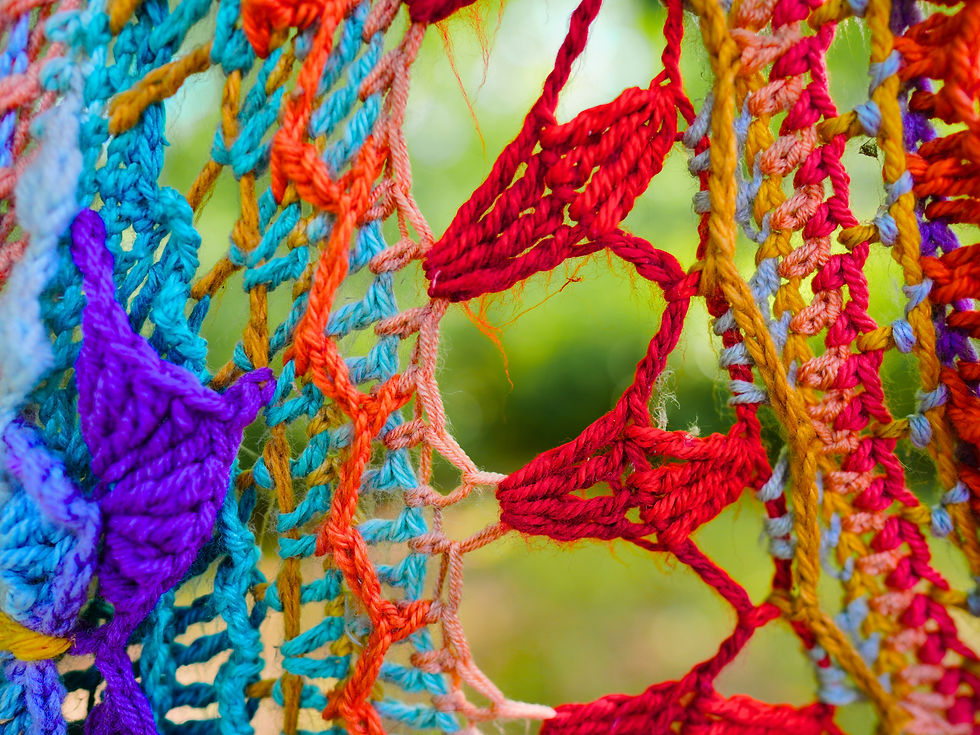
In crochet, you have many different stitch patterns, styles and types. You can create lace stitches, using a series of the basic stitches, like slip stitches, single crochets, double crochets, etc. You can create textured patterns, like bobble stitches, popcorn stitches and puff stitches by combining parts of basic stitches, which tends to be a version of the double crochet. You can even make faux knitted pieces, by crossing stitches over or working stitches in the front post, back post, front loop or back loop, of previous rows and rounds, or overlapping them with other parts of your piece. There are endless techniques in crochet that knitting doesn’t have, and it is because of these techniques that make crochet more difficult and more complicated than knitting.
What Craft Will You Choose?
I think it’s needless to say, I prefer crochet over knitting, because you can do so much more with the craft, but every now and then, I do prefer to knit something, rather than crochet, because it’s quicker and easier to do. However, because crochet is a complicated craft, it’s more difficult to sell, especially when customers have certain expectations for crochet, because of knitting. From my perspective, by identifying the differences between the two crafts, we can all appreciate them both in their own ways.

While knitting might be easier than crochet, it is by no means less valuable, especially if it’s handmade. After all, it still takes time and effort to make a knitted piece, especially if colour-work is involved (I have still yet to master that aspect of knitting). So, the next time you come across a hand-knitted or a hand-crocheted piece, ask yourself, how long do you think it would take to make the piece? How simple does the pattern look? And if you’re a crafter yourself, how much would you have sold the piece for, if you made it? Once you ask yourself these questions, you’ll learn to appreciate why handmade pieces cost a lot more than one made by a high street brand.
Alright, I think I’ve made my point. I’m going to go and continue crocheting and frogging this ridiculous sweater I’ve been trying to make, for the past few months. While I go do that, please don’t forget to like, subscribe, comment, share and follow me, here on Feather’s Charm, on my YouTube channel, on my other social media channels (Instagram, Twitter/X, TikTok), and on Patreon. Your support really does help me make more content like this, for you guys.
And as always, be kind, be creative, and be unique.
I’ll see you later!
Feather, out!


Comments