
What I've Learned About Beading - 5 Things I Want To Try

Hello Everyone!
Today’s post is all about, as you can see, beading! I’ve always been fascinated by it and wanted to give it a go. In fact, I have tried it, but only in its simplest form. I have yet to elevate my skills to a more advanced level of beading, because, as you all know, I don’t currently have a lot of time, but we will get there eventually. Essentially, as part of my jewellery making adventures, I stumbled upon beading and am slowly dipping my toes in that area of crafts.

Now, why are we looking at beading? Well, in all honesty, it’s a faster form of jewellery making than macrame, or friendship bracelet making (I know, I’m in the middle of making one right now, and it is taking me a few days, because I’m having to work on it slowly). Of course, like with macrame, beading has a whole history of its own, and it’s not just defined by one nation. It is an ancient practice that can be dated as far back as 100 000 years ago, maybe even more (depending on which sources you rely on), and in all honesty, I’m curious about what patterns, images and ideas I can come up with, using those tiny things. So, delve into the world of beading with me.
First Off A Note On The History Of Beading
Beading, or the art of stringing beads together can be seen as far back as around 100 000 years ago, and was seen everywhere, from body accessories to actual interior design and was found all over the world. It was a universal craft, before universal crafts were even acknowledged. In fact, beadworks have been found in many burial sites by archaeologists all over the world, all of them using similar or different materials, like seashells, glass, stones, and even seeds.

Most beadworks were once associated with power and spirituality. In many ancient cultures, they symbolised that the person wearing the beads were protected, wealthy and powerful. It’s why they’re found, buried in ancient gravesites and in tombs. They were essentially amulets used for all sorts of reasons, such as protection, good fortune and even fertility. For example, in ancient Egypt, certain materials, colours and even shapes had specific meanings, like turquoise representing fertility, lapis lazuli representing the sky and heaven, and carnelian representing blood and the source of life. While nowadays, we see beadwork as pretty and decorative things, in the ancient world, they were symbols, amulets and sources of spiritual protection.
Ok, Let’s Get Down To The Techniques Of Beading
So, we have a very brief history of beadwork. However, I would highly recommend you do your research before going down the beading path because, while for the most part, it’s simply a form of jewellery making and art, it is also still considered as a respected spiritual practice, in many parts of the world (like in many Native American cultures and in India).
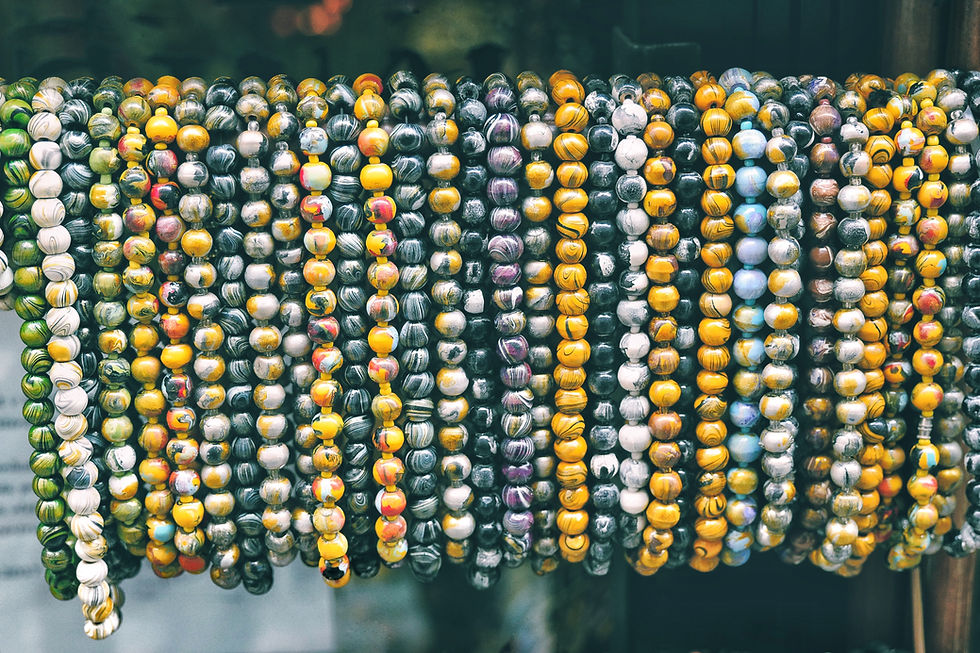
When you create your own patterns and pieces, be mindful which ones you create. Some patterns are reserved for these cultural practices, and you may need to request permission to use them. With that being said, let’s take a look at some beading techniques that I find fascinating, and will eventually try out, when I can sit down and practice.
1. The Simple String
So, we all know the simple stringing technique, we may have played with them as children, and made some questionable designs, because the large and small beads were colourful, it didn’t matter if there was a pattern or not. It’s a similar story with stringing beads as adults. We choose the beads we like, and add them to a string, one by one. It doesn’t take too much time, it doesn't require too much dexterity, so even those with shaky hands (like myself) can create simple bracelets, necklaces, and even earrings, with them.

What does matter here is the beads you choose. If you don’t want it to look like a child’s art project, then choose your beads carefully. You can string flat beads together and make a dense friendship bracelet, you can string letters together to create a sentence or a word, or you can even string gemstones in a specific order, to create a meaningful piece. Whatever you want to make, it’s easy to do, and is the beginner’s level of beading. I mean, if children can do it, so can you.
2. Wire Beading
Using wire to string beads together is something I’ve been looking into. While the use of string and elastic cords are one of the most used forms in beading, I like the idea of using metal. After all, it’s more durable than string or elastic, and if combined with thicker wires and larger gemstones, you can create interesting looking pieces. So, if your eyesight isn’t great (like mine), you won’t have to squint to find the holes in your beads. You also won’t need to pre-string your beads, just to get a pattern, you can always add to what you have, by wiring the bead on and make extra charms for the piece.

If you’ve seen my previous jewellery making post, you’ll have seen some of the pieces I’ve made, using gem chips and charms. I literally wired those pieces together, with half a design in mind. Eventually, those prototypes were made, and I was happy with them. Of course, later down the line I may look at them again, and see what could be improved on, once my wire bending skills have also developed, but like the simple string, it’s another great beginner technique to try, and it may even lead to other metal works, like actual metal shaping, and using blow torches or metal curing techniques to make even more luxurious styles of jewellery.
3. Macrame Beading
As you all know, I’m starting to take my first steps into the macrame world, and part of it includes beading. I’ve actually attempted a simple macrame keychain or phone charm, with some beads I’d scavenged, from a customer I had at a previous workplace. Her phone charm broke, and she wanted to throw the beads away, but I took them instead, and made something else out of them (although it’s been a couple of years since the encounter, but I’ve finally made use of the beads!).
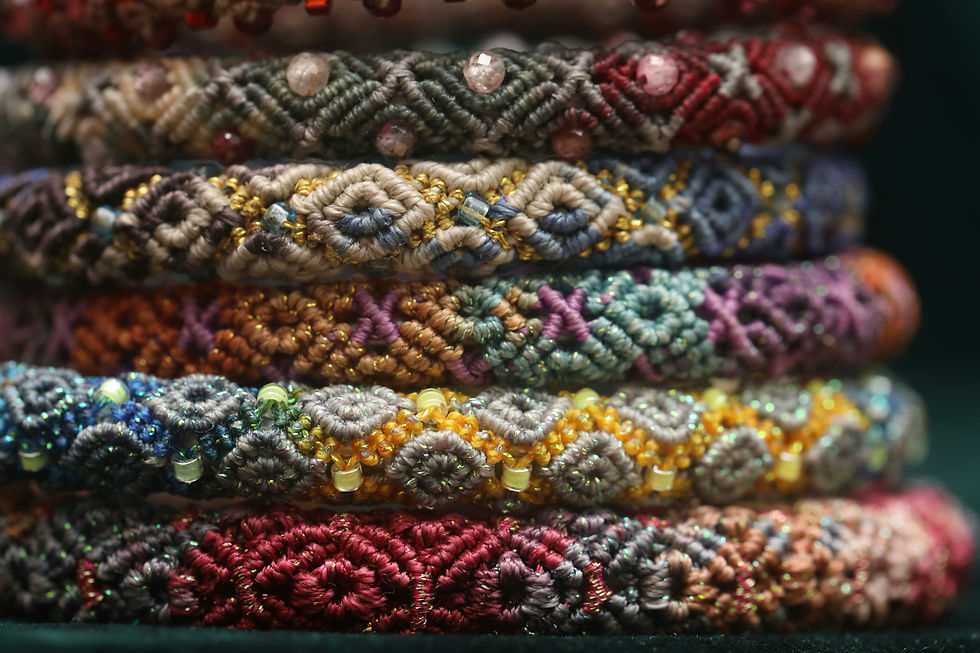
Macrame beading, like wire beading doesn’t require pre-stringing the beads, and because the cord you use is thicker than the transparent string that’s normally used in other beading techniques, you won’t have to squint to see what you’re working with. In fact, you can string larger beads and other materials to the piece, and actually create other things with it, like wall hangings, curtains or other interior design pieces.
4. Crochet Beading
This is another technique I’m looking into, because it combines two crafts, one I'm starting to play about with, and one that I know very well. As you all know, I’ve been crocheting since I was 11 years old, and only recently did I discover the world of crochet beading. Mind you, I’ve not given it a go...yet, but the things you can make with crochet beading is astounding! I’m very interested in giving it a go, and hope that one day, I can create something with it. Of course, as with all my other craft ideas, it will take time, but I’m looking forward to it, and hope I can add it to my repertoire.

If you don’t know already, crochet beading combines beading and crochet together. So, you would string a pattern of beads onto your yarn (or in this case string) and crochet them together. You don’t need complicated stitches for it. In fact, a chain stitch and single crochet stitch are all you need, and you can make all sorts of things, like small figurines for keychains and earrings, those patterned crochet beaded ropes for thick bangles and even beaded bags. Just remember this method does require pre-stringing, so if you do decide to take up crochet beading, figure out what kind of pattern you want to make first, and ensure you have enough beads for the project you’re making.
5. Loom Beading
Loom beading is another cool technique. You’re essentially weaving beads together to create a fabric made of beads. I find this technique fascinating, because these fabrics can be as small or as large as you want them to be, and even create pictures and images. Like with most of the other techniques, you don’t need to pre-string the beads. It’s completely up to you what patterns you make from it. The only downside is that you might be limited by the size of your loom, so choose your loom wisely.
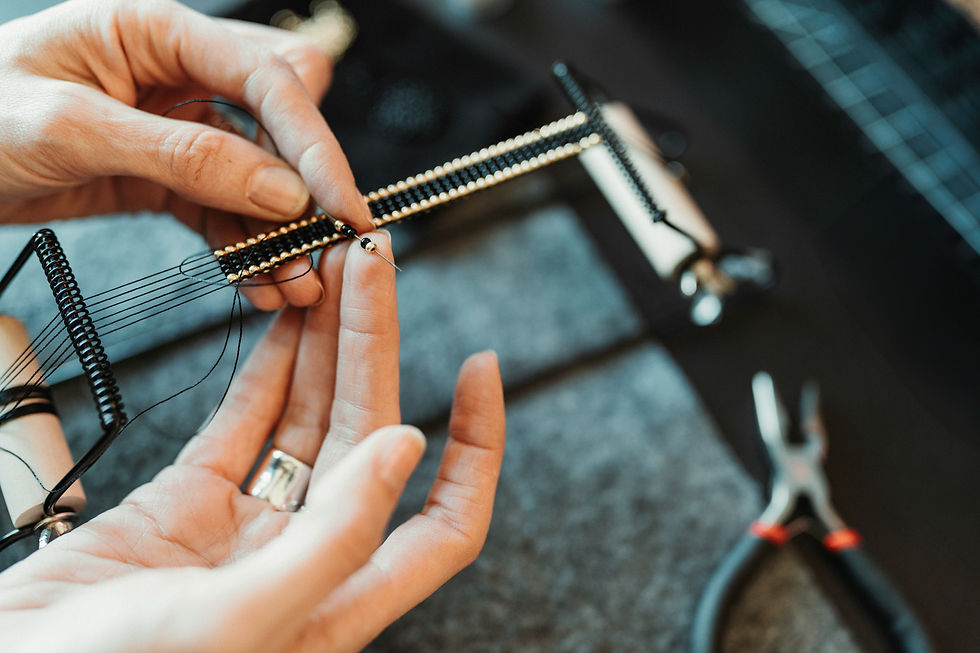
I’m always fascinated by any technique that will allow me to create flat pieces, because then I can create pictures from those flat pieces. However, you will need a lot of coloured beads, especially if you’re trying to make an actual scene (like a beach or something). So, there’s a lot of resources you may need to buy, before you can actually create the piece. If you want to create a picture, you’ll need a wide variety of colours, in the same size, and if you’re working with smaller beads, you will need to have very good eyesight, or a magnifying glass.
Beading – An Art Form
It really is an art form, one I want to try, once I have enough time. Of course, at the same time, it’s also a craft, and you all know I love my crafts. So, hopefully, one day, I can post up images of my beadwork, and videos of my progress. For now, it’s a plan, one that I’m slowly stepping into (after all, I did say I was working on using the Macrame Beading technique).
Well, that’s it from me today. I’m going to go and try another small macrame keychain, who knows, I may include a bead or two. While I go do that, please don’t forget to like, subscribe, comment, share and follow me, here on Feather’s Charm, on my YouTube channel, on my other social media channels (Instagram, Twitter/X, TikTok), and on Patreon. Your support really helps me make more content like this, for you guys.
And as always, be kind, be creative, and be unique.
I’ll see you later!
Feather, out!


Comments